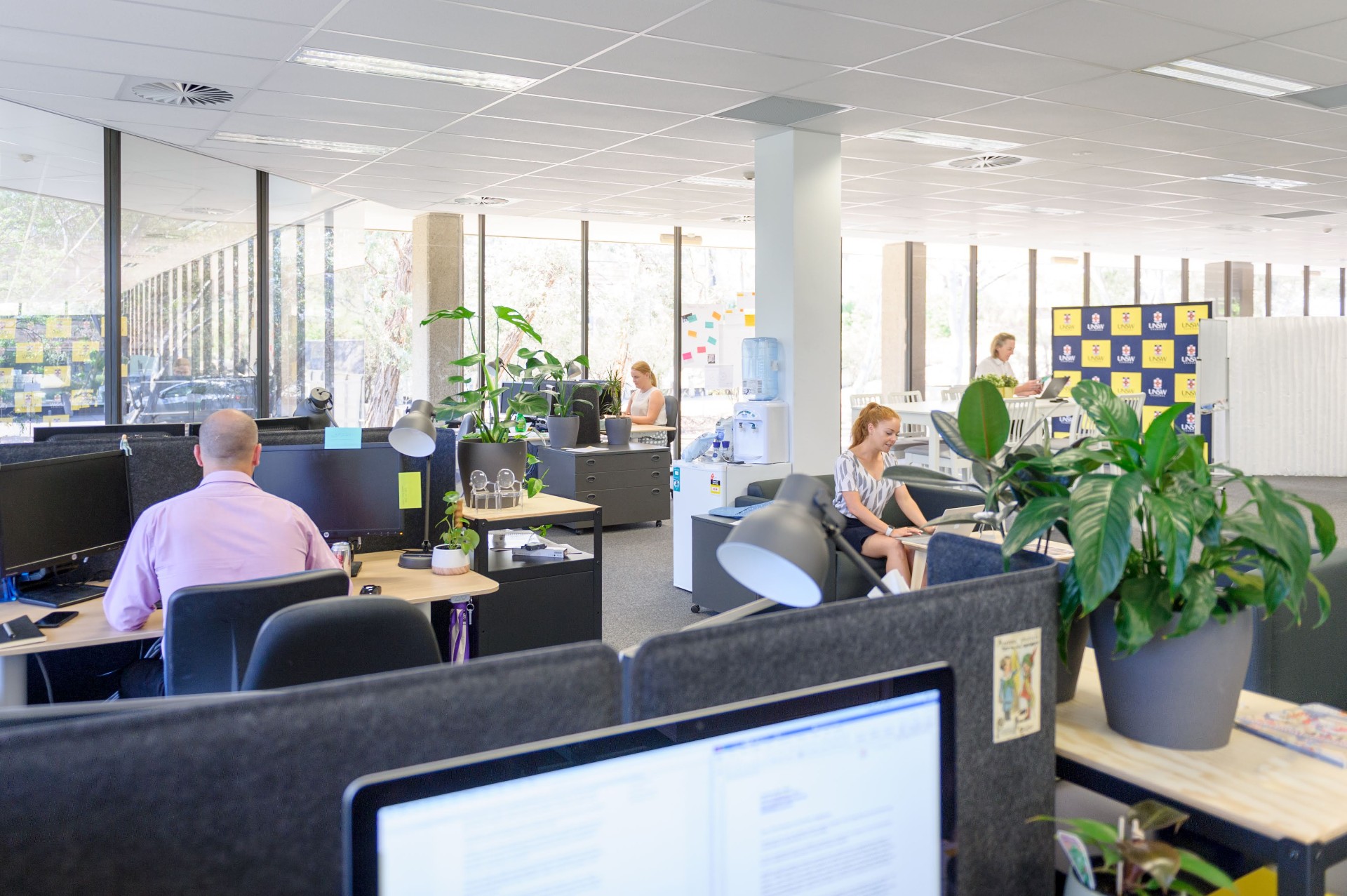
The UNSW Business Insights Institute has recently collaborated with UNSW Estate Management to conduct a comprehensive study that will significantly influence the future design of office spaces for academics. As part of the university's ambitious Future Campus project, this research seeks to enhance the productivity and well-being of academic staff by reimagining their work environments.
Key insights on office design and academic productivity
The study aimed to answer a critical question: "What evidence is there about the influence of office design on the well-being and productivity of academics?" The findings provide valuable insights that will guide the future design of academic workspaces, particularly in the context of post-pandemic needs.
Private offices vs. open office plans: The research highlights a strong preference among academics for private offices, which are associated with higher productivity and lower stress levels. Academics find private offices crucial for tasks requiring deep focus, privacy, and the handling of confidential information. On the other hand, while open office plans are often touted for fostering collaboration, the study found that they can lead to significant drawbacks, including increased distractions, stress, and a sense of disconnection among colleagues.
Layout factors: Workstation density, orientation, and office space size were also found to play critical roles in influencing academic satisfaction and productivity. High workstation density is linked to lower productivity and satisfaction, while personal space issues like visual and sound privacy are vital. The orientation of workstations, particularly those with north-facing windows, is preferred for better natural light and comfort. Larger office spaces, especially for senior academics, contribute to higher satisfaction levels.
Implications for future office design
The findings of this study underscore the need for tailored office designs in academic settings. To maximise productivity and well-being, it is essential to prioritise private office spaces while also considering the potential benefits of well-designed open spaces that minimise distractions. Attention to physical and environmental factors, such as thermal comfort, aesthetics, and cleanliness, is also crucial in creating a positive work environment.
Interested in space redesigning to boost productivity and well-being?
Contact us today to get started